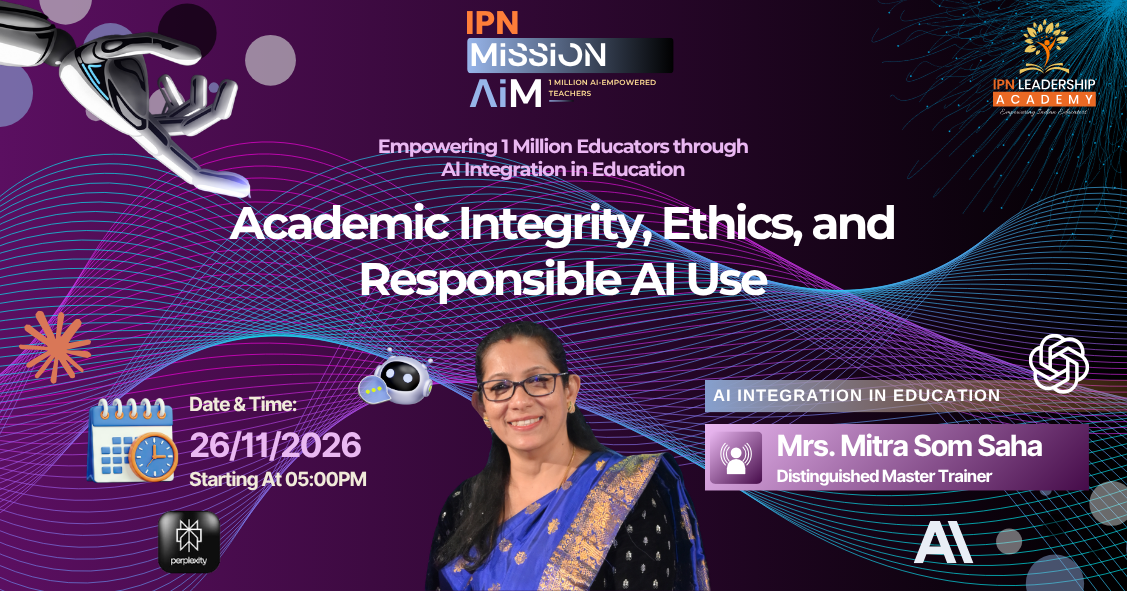
AI can make teaching faster, but only ethical use makes it trustworthy. This workshop helps educators set clear, practical boundaries so AI strengthens honest learning in their classrooms instead of undermining it.
Workshop Resource Person
Distinguished Master Trainer
Workshop Reviews
User Feedbacks
What you'll Learn?
Understand the ethical concerns around AI in education, including bias, privacy, misinformation and over-dependence, and recognise the limits of AI tools
Distinguish between acceptable AI assistance and academic dishonesty in student work, and spot common signs of AI misuse
Design assignments and assessments that encourage original thinking and reduce the scope for AI-based shortcuts
Teach students to use AI responsibly, with transparency, citation and critical evaluation of AI-generated content
Draft a clear AI-use policy and classroom guidelines that suit their school’s context
Skills learned
Ethical Decision-Making — Weighing the benefits and risks of AI tools before using them in teaching, assessment and communication.
Academic Integrity Safeguarding — Identifying AI-generated or over-assisted work fairly, and responding in a way that supports learning rather than simply punishing.
AI-Resilient Assessment Design — Building tasks such as reflections, process journals, oral explanations and real-world applications that show genuine understanding.
Critical Evaluation of AI Output — Fact-checking AI responses and teaching students to question accuracy, bias and sources.
Policy & Guideline Writing — Creating simple, enforceable AI-use rules and communicating them to students, parents and colleagues.