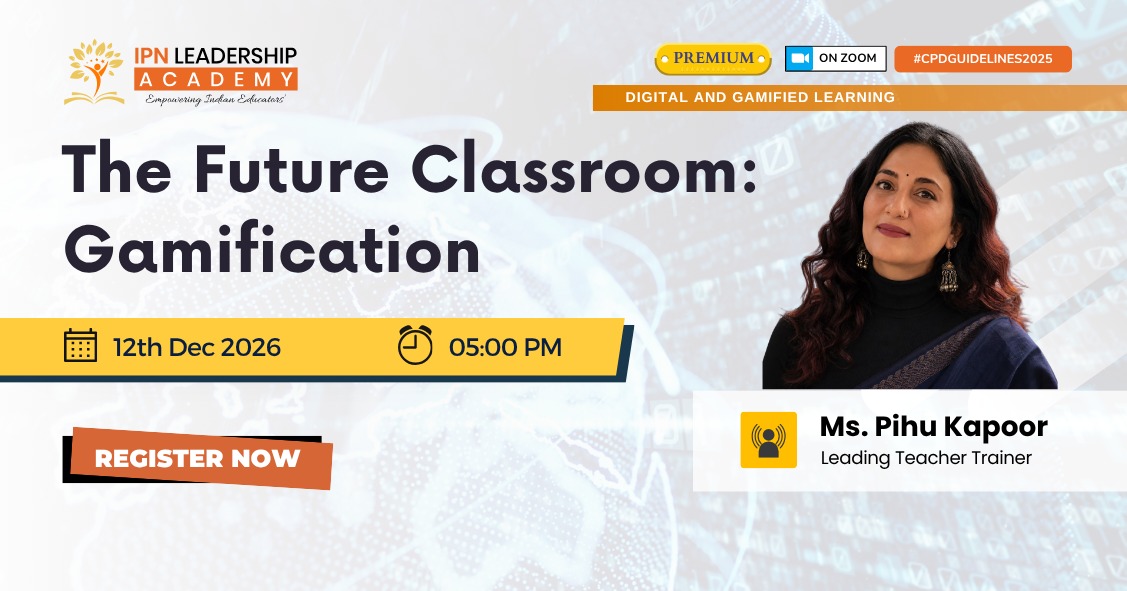
Exploring how simple digital tools and interactive platforms can complement pedagogical practices and enhance classroom engagement.
Workshop Resource Person
Master trainer
Workshop Reviews
User Feedbacks
What you'll Learn?
Understand the core elements of gamification — including points, levels, badges, challenges and feedback loops — and explore how these can enhance meaningful learning experiences.
Distinguish meaningful gamification from superficial reward systems, recognising the importance of intrinsic motivation, learner engagement, collaboration and purposeful play.
Design a gamified lesson or learning unit aligned with specific learning objectives, integrating challenges, choice, exploration and opportunities for reflection.
Select and use appropriate digital and low-tech tools to facilitate quizzes, learning missions, collaborative tasks and team challenges.
Adapt game-based learning experiences to support diverse learners, ensuring that competition encourages participation, collaboration and a sense of achievement rather than discouraging or excluding learners.
Skills learned
Play-Based Game Design: Creating simple games with sticker charts, treasure hunts and “mission” activities that build early literacy, numeracy and motor skills.
Joyful Motivation: Using praise, choice and visible progress, such as a sticker garden or a “growing tree” chart, to build curiosity and confidence rather than a need for prizes.
Hands-On & Low-Tech Tools: Using everyday materials like flashcards, dice, blocks and songs, plus age-appropriate apps used sparingly under teacher guidance.
Gentle, Inclusive Play: Favouring team and cooperative games over competition, so shy, slower or younger children feel safe, included and celebrated.
Observing Learning Through Play: Watching how children respond, such as their engagement, language and problem-solving, and adjusting the game to fit their pace and attention span.